Phillip Payne Studio
Behind the Artist
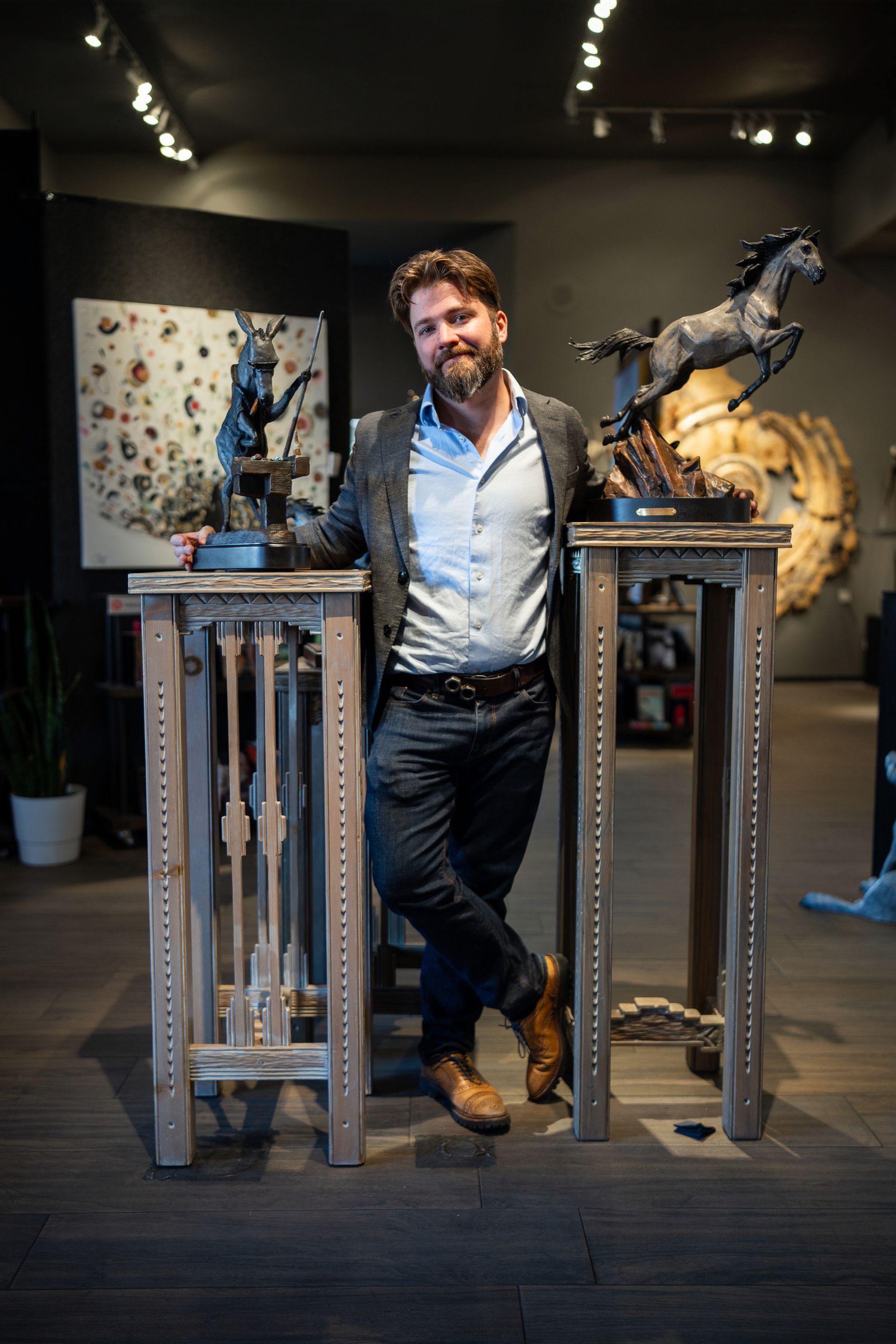
An Artist Studio Session with Phillip Payne
Phillip Payne’s work begins not with an image, but with a story.
“Everything that I’ve chosen for subject matter has been based off things I have read. Maybe I read something about Beethoven or Geronimo, and that creates a picture in my mind. I love that as a source for inspiration. As opposed to making this look like something I’ve seen, I make it look like what is in my imagination.”
As owner of Anticus Gallery, a bookstore and art gallery in Old Town Scottsdale, Payne is surrounded by literary inspiration. He also draws from the artistic heritage of his father, renowned bronze sculptor Ken Payne. “My work is informed by other artwork I’ve seen, including my dad’s, but the compositions and the stories have been genuine and my own as best I can.”
Payne speaks fondly of his father and relates how the elder Payne motivated his son to complete his first piece at age 14. “My dad wouldn’t buy me a car. He said if I did a piece that was good enough, he would put it in his gallery. It sold, and I bought a 1986 Toyota 4Runner that was a year older than I was. I loved that car.”
A self-proclaimed “eighth-grade dropout,” Payne says he started sculpting with clay before he could walk and learned from his father rather than formal art school. He grew up in Arizona, first in Sedona, then lived on the Navajo Nation until he was 18.
He opened his first gallery at 19.
Payne finds inspiration from Beethoven, particularly his quote stating that as long as you can do a “single good deed,” it is worth being alive. “I think with art, if you can see it as something good coming from you that has been placed there for it to be shared with the world, and only you can share that specific version of it, then that’s a beautiful thing,” he says.
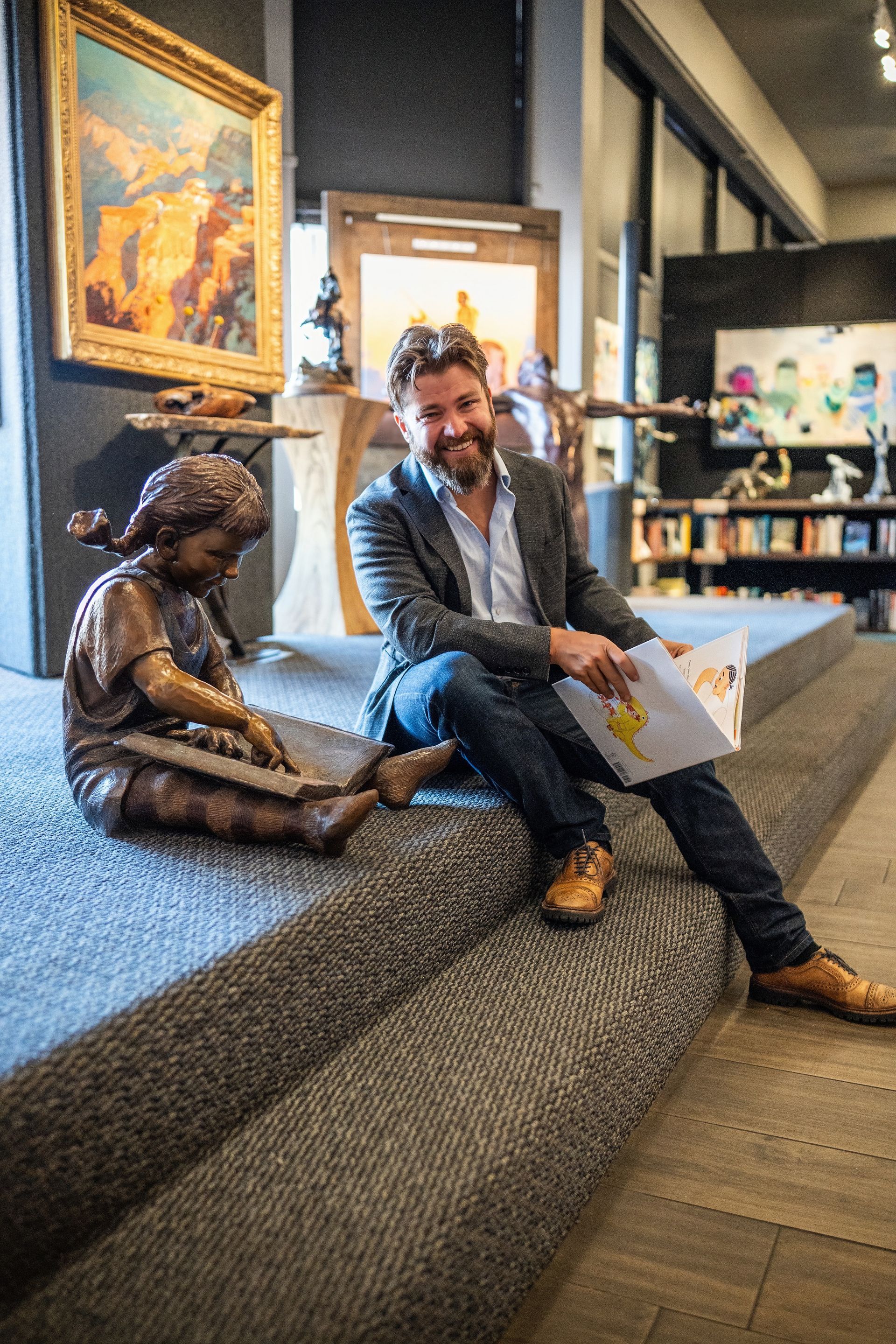
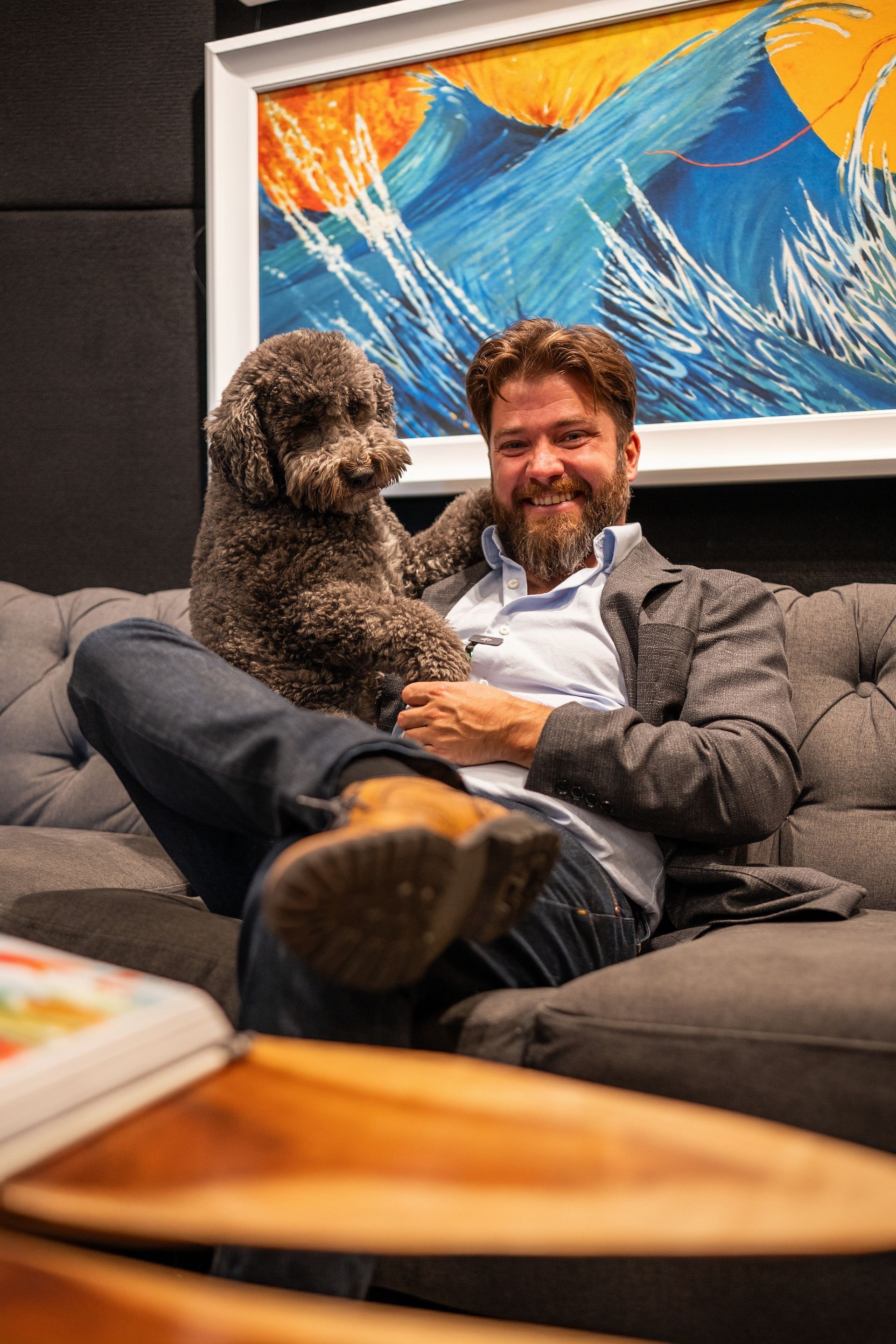
Payne works on his art, including sculpting, painting and writing, at Anticus Gallery and enjoys interacting with customers.
When he opened the shop in 2016, he had community in mind. “If I was going to own an art gallery, how would I make it different?” he says. “Adding books was kind of my way of saying everyone’s invited. The goal is to be a culture driver that keeps people connected and imagining.”
– Judy Karnia
Da Vinci’s Notebooks
“I like the da Vinci approach, like the old masters, where they really had to understand things before painting. Paint was rare, and it wasn’t like they could just go buy a bunch of tubes and throw it on.”
Paint Color Study
“I do this practice of seeing how every color relates to every other color on the palette. It shows all the work that goes into it before you even start painting.”
Calipers
“This is used for scaling, and I use it mostly in anatomy. Say I wanted to measure out a leg and I’m sculpting it – I’d set these to the dimension that I want.”
Metal Carving Instrument
“This sculpting tool is special, not only because of the textures it creates, but because it was a gift from another artist who had made it himself by hand.”
“Sound of Music” by Ken Payne
“It’s such a complicated piece, they had to cast in 135 separate pieces… then weld it all together in bronze, then do the color.”